How to Verify a Chinese Supplier: Company, Product and Payment Checks
A polished storefront, a "verified" badge or a photo of a busy factory floor can all make a supplier look trustworthy. None of them, on their own, proves that the company you are paying is the company that will make and ship your goods. Supplier verification works best when you split it into three separate questions: who is the legal entity, can it actually supply the agreed product, and does the payment and delivery arrangement match. JTLGO, a China sourcing and logistics service, sets out this approach in its China supplier verification guide. This article walks through the same logic for a first overseas order.
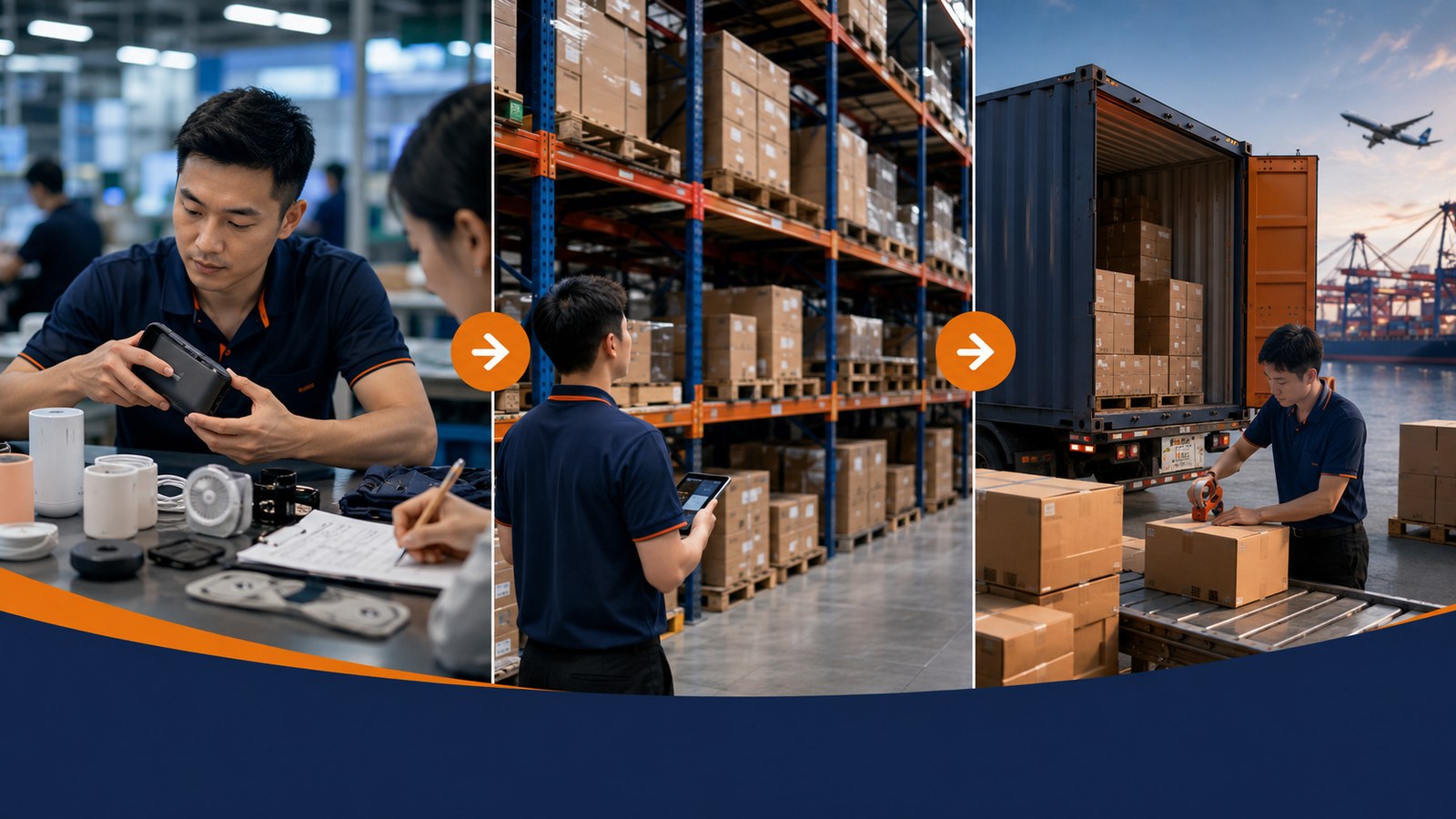
China sourcing agent for supplier discovery, comparison and QC planning. Image: jtlgo.com.
Put the legal identity on one page
Start by asking the supplier for its full registered Chinese company name, its Unified Social Credit Code, a copy of the business licence, the operating address and the name of the legal entity that is issuing the quotation. Keep the original Chinese spelling. An English trading name often does not match the registered name, and a mismatch is something to resolve, not ignore.
You can then check these details through the National Enterprise Credit Information Publicity System, reachable from the State Administration for Market Regulation's official portal. Search the exact name or code and compare the result with what the supplier sent: name, registration status, address and business scope. If the entity on the quotation is different from the one on the licence, ask why before going further.
Ask who actually makes the product
Many sellers on marketplaces are trading companies rather than factories. That is not a problem in itself; a good trading company can manage several factories well. What matters is that you know which it is. Ask directly whether the supplier manufactures the product, assembles it or buys it from another factory, and ask what part of the process happens where.
JTLGO's finding suppliers in China page lists the signals a sourcing team weighs: listing consistency, communication quality, pricing logic, MOQ and sample feasibility. A supplier whose answers change from one message to the next is a warning sign, whatever its badges say.
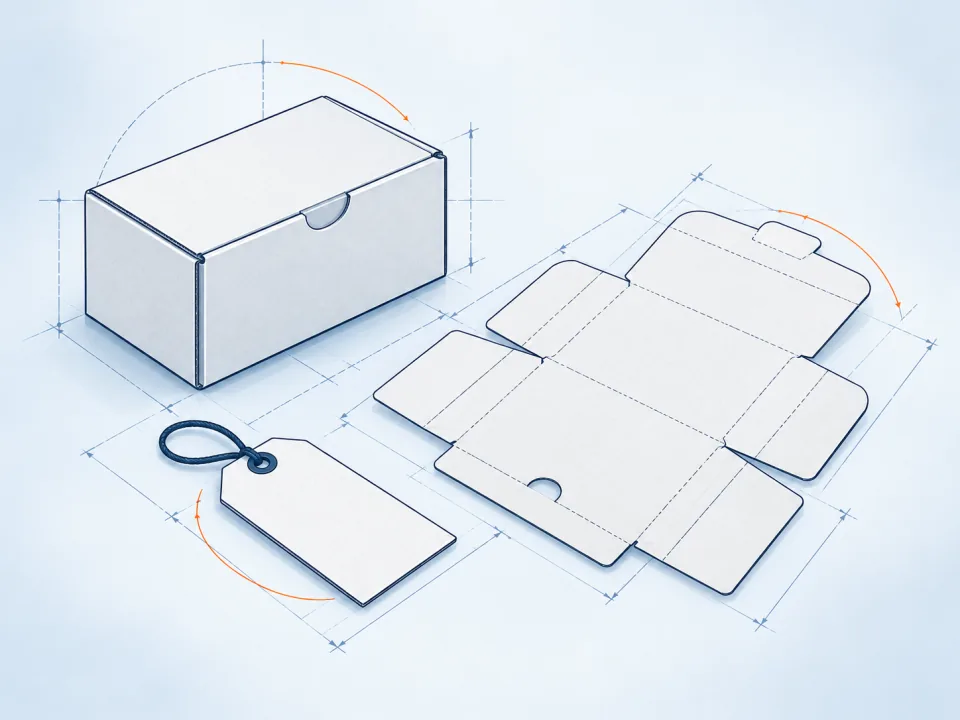
Illustration of private label and custom packaging. Image: jtlgo.com.
Turn the listing into a specification
A marketplace listing is a sales page, not a contract. Before ordering, convert it into a written specification: material, dimensions, colour, finish, accessories, packaging, labelling and quantity per carton. Send it back to the supplier and ask them to confirm it in writing. JTLGO also publishes a supplier RFQ template that structures this kind of request.
This step does two things. It forces vague points into the open before production, and it gives you something concrete to check when the goods arrive. Without a specification, "not as described" is hard to prove.
Test the supplier with a small order
The most reliable verification is a real transaction at a size you can afford to lose. A sample or small first order tests the product, the packaging, the supplier's response time and its honesty about delays. Check the sample against your specification and keep a record of what was approved.
When the goods reach a China warehouse, a photo check can catch visible problems before they travel overseas. JTLGO's quality inspection in China service covers photo checks, package condition, quantity matching and label checks after supplier delivery. The site is clear that warehouse photo checks do not replace laboratory testing or a full factory inspection, so for regulated or high-value goods, agree specialist checks before paying.
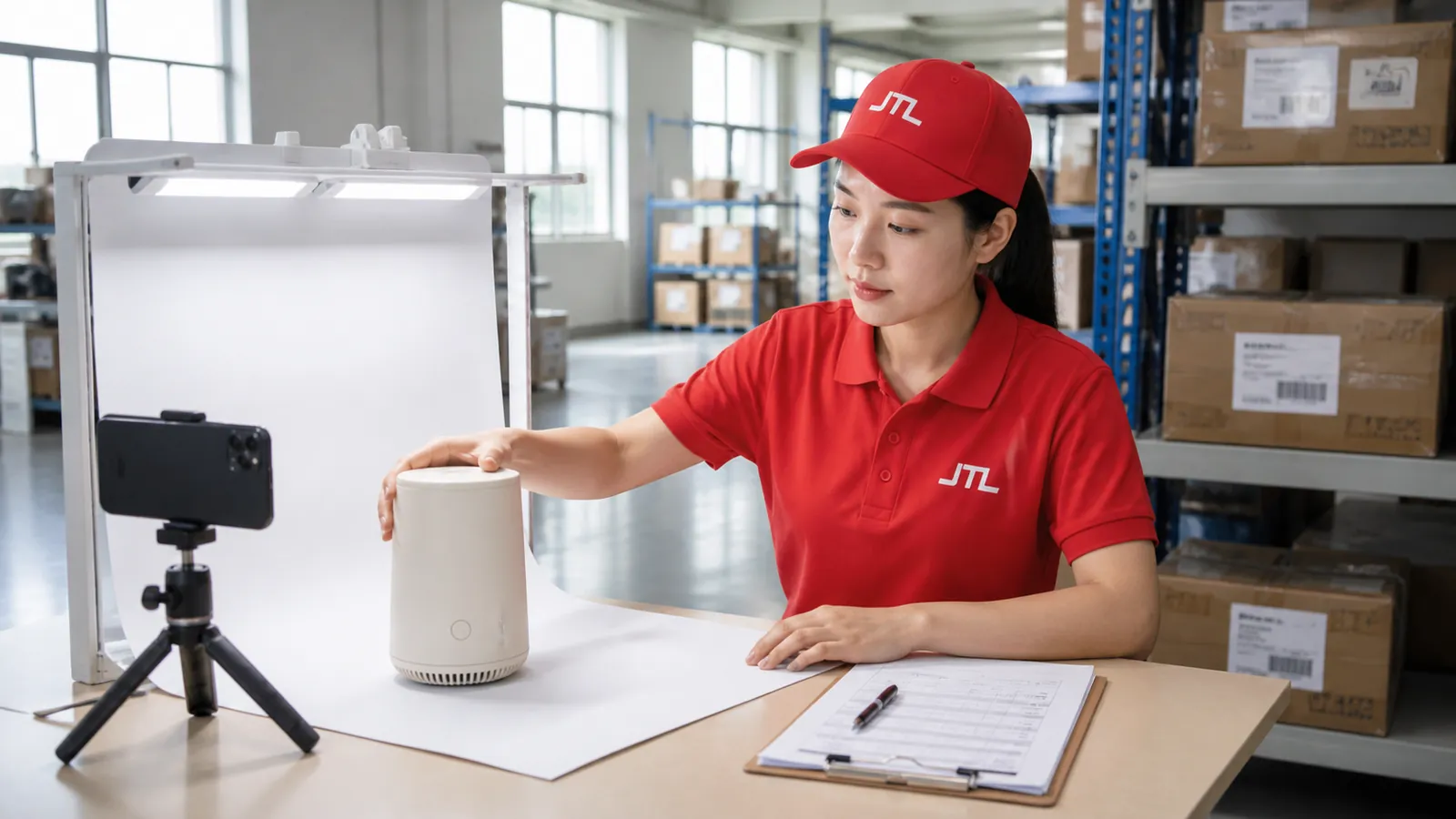
A warehouse inspector photographing an unbranded product with an inspection checklist on the bench. Image: jtlgo.com.
Keep the order and payment trail consistent
The final check is that money and paperwork line up. The company on the quotation, the invoice, the contract and the receiving bank account should be the same legal entity, or any difference should be explained in writing. Be cautious of last-minute requests to pay a different account or a personal account. Keep every quote, confirmation and chat record together so the trail can be reviewed later.
If you would rather not manage these checks alone, JTLGO's about page lists supplier verification and quote support among its services, alongside warehouse consolidation and freight planning.
Verification is not a one-time event either. Re-check the details when a supplier changes its company name, invoicing entity or bank account, and repeat a small test order when you move to a new product line. A supplier that was reliable for one product may subcontract another to a factory you have never assessed.
FAQ
Is a business licence enough to verify a Chinese supplier?
No. A licence confirms a registered entity, but not that it can make your product or that the payment arrangement matches. Check all three separately.
What is a Unified Social Credit Code?
It is the registration identifier for Chinese companies. You can use it to look up the entity in the National Enterprise Credit Information Publicity System.
Are trading companies worse than factories?
Not necessarily. What matters is knowing which you are dealing with and confirming who controls production and quality.
Can JTLGO help with supplier checks?
Yes, JTLGO lists supplier verification and quote support. Contact sales@jtlgo.com or use the contact page.
Should I pay a new supplier in full up front?
That depends on your risk tolerance, but a small test order first limits how much you can lose while you confirm the supplier's identity and product.
Contact JTLGO: email sales@jtlgo.com · WhatsApp +86 139 2810 3300 · No. 20, Zhongshan 6th Road, Zhongshan City, Guangdong, China · jtlgo.com